Home › Walkway and Pathway Paving
Create safe, attractive access around your property with asphalt walkway paving in Charleston, SC. We design and install smooth, low maintenance paths for gardens, side yards, and connections to driveways or patios, matching the look of your home.
Precision Asphalt Charleston provides professional asphalt walkway paving throughout Charleston, SC, South Carolina and the surrounding area. Our licensed, insured crew delivers safe, clean, on-time work with a free estimate before anything begins. Call (854) 666-3678 or request your free quote.
Asphalt Walkways and Pathways Tailored for Charleston Properties
If you are thinking about adding or upgrading a walkway, you want something that looks clean, drains well, and holds up to Charleston heat and storms. At Precision Asphalt Charleston, we focus specifically on asphalt walkway paving that fits Lowcountry soil conditions and local design styles, so your path looks good and stays safe under real-world use.
Asphalt walkways work well for residential yards, neighborhood trails, community amenity areas, schools, and commercial campuses. They create a smooth, slip-resistant surface that is easier on feet, strollers, and bikes than rough concrete or pavers. When done right, an asphalt path also provides a finished edge to landscaping and helps control where people walk, which protects grass and planting beds.
For Charleston, the details matter. Our soils tend to be sandy with areas of clay and a high water table. If your contractor ignores drainage, your walkway may settle, crack, or grow moss where water collects. Precision Asphalt Charleston starts each project with a site visit to check existing grades, where water currently flows, tree root zones, and how the path will connect to driveways, doors, or sidewalks. That local knowledge shapes the design so your walkway works with the property instead of fighting against it.
How We Actually Build Your Asphalt Walkway or Path
Walkway paving is more than just laying down blacktop. A durable, smooth path comes from careful prep work. Here is how we typically build asphalt walkways and pathways in Charleston.
First, we plan the route. We walk the property with you to mark the exact alignment, width, and start and end points. For example, on a residential job we might create a 4 foot wide path from driveway to front porch, then flare it to 6 feet near the steps for easier passing. On HOA or park paths, widths of 6 to 8 feet are more common so walkers and cyclists can safely share the space.
Second, we handle excavation and base prep. We strip sod and organic material, then dig down to create room for the base rock and asphalt. Depth depends on use. A lightly used garden path might need 4 inches of crushed stone. A neighborhood greenway that will see bikes and golf carts might call for 6 to 8 inches. We compact the subgrade with plate compactors or rollers so it is firm and uniform.
Third, we install and compact the stone base. We use graded aggregate that locks together once compacted. In low spots or wetter yards we may add extra base and shape a slight crown or cross slope so water runs off instead of sitting on the surface. On sloped sites, we pay special attention to transitions so no one catches a toe on an edge.
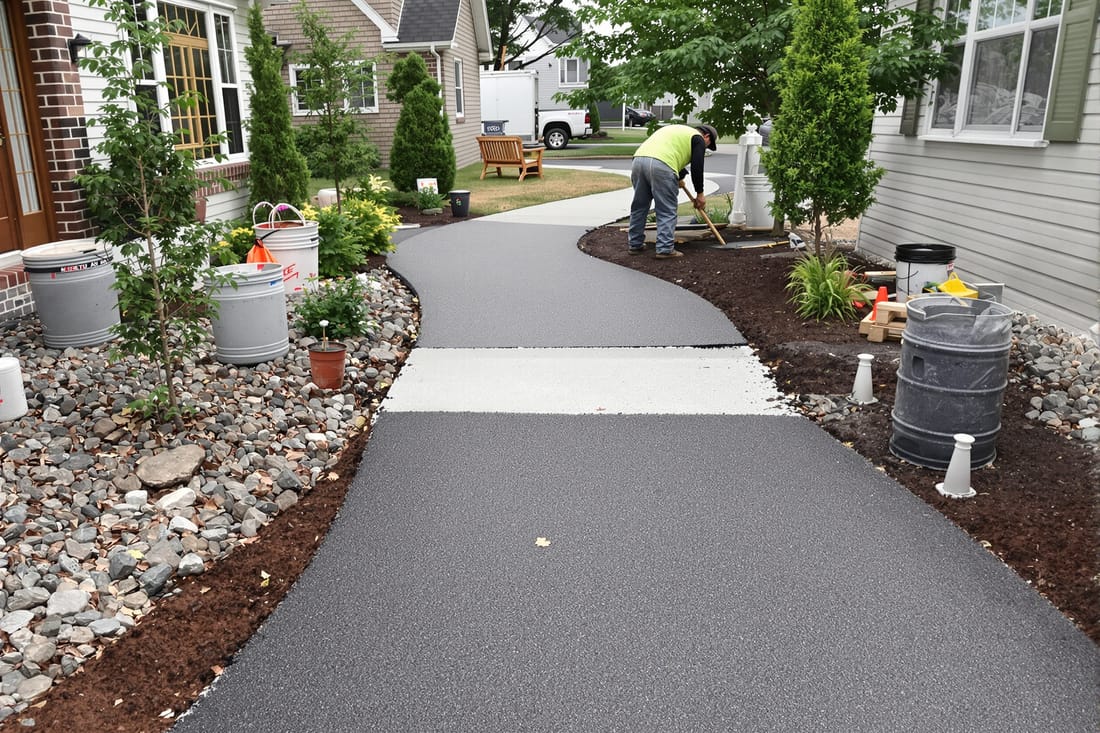
Fourth, we pave with hot mix asphalt. For most walkways we install 2 to 3 inches of asphalt in a single lift. For heavier-use community paths, we may place two lifts, a base course and a surface course, for added strength. While the asphalt is still workable, we use hand tools to shape edges against soil or landscape borders, then compact everything with small rollers and plate tampers so you get a tight, even surface with no loose areas.
Finally, we finish and clean up. We check for puddling by spraying water or monitoring after a rain, and if we see a low spot we correct it while the material is still fresh or schedule a quick repair after curing. We also coordinate with you on when to open the walkway. Typically, light foot traffic is fine after 24 hours, but we recommend a couple of days before moving heavy wheelbarrows or carts across the new surface.
Design Options: Width, Curves, Borders, and Accessibility
A good walkway is not only sturdy, it also fits the look of your property and how people actually move through the space. Precision Asphalt Charleston helps you make design decisions up front so the project does not have surprise changes halfway through.
Width is usually the first choice. For single file residential access, 3 to 4 feet can work, but most homeowners prefer at least 4 feet so two people can walk side by side. Community and commercial paths typically run 6 to 10 feet wide, depending on expected traffic, mix of walkers and cyclists, and any local guidelines.
Layout is next. Straight runs cost less, but gentle curves often look better and work around trees and landscaping. In Charleston, we often curve paths to avoid damaging established live oaks and their root systems. Cutting roots aggressively can weaken a tree, so we adjust the alignment or raise the path slightly with more base material instead of digging too deep near trunks.
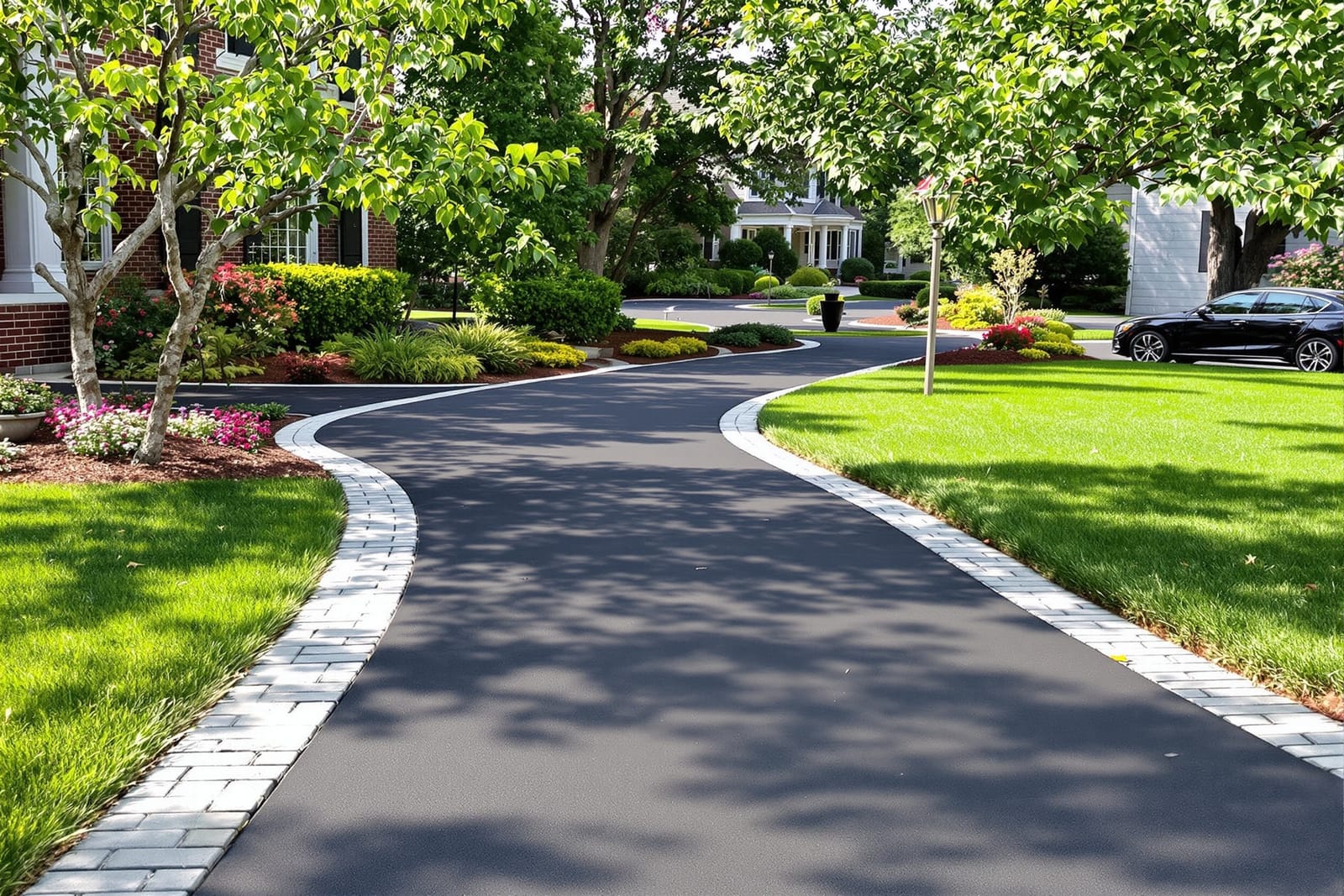
Edging and borders give your walkway a finished look and protect the edges from raveling. We can finish edges in a few ways, such as asphalt flush to soil for a natural transition into grass, asphalt with a compacted soil shoulder for low-visibility support, or asphalt bordered with concrete, brick, or landscape edging if you want a more formal look. Concrete or brick borders also help keep mulch and stone out of the walking surface.
Accessibility is also important. We pay attention to slopes, cross slopes, and transitions to make walkways friendly for people using wheelchairs, walkers, or strollers. That includes smoothing the tie-in to existing concrete pads, reducing abrupt steps, and using gentle grades wherever possible. If you have specific ADA or community standards to meet, we can design the walkway profile and width with those in mind.
Finally, we talk about surface appearance and maintenance. Standard asphalt has a uniform black finish that we can later sealcoat for added UV and water protection. For higher-visibility areas, some clients choose to add sealcoat with aggregate for extra traction or color contrast near steps and entryways. We will explain what fits your specific location so you can balance cost and appearance.
What Drives Cost and How We Prevent Common Walkway Problems
Every property is different, so we explain pricing clearly before we start. Several factors influence the cost of asphalt walkway paving in Charleston.
Total square footage and path shape have a big impact. Straight runs with easy access for our equipment cost less than narrow, winding paths that we must build mostly by hand. If trucks cannot get close and we have to move material with wheelbarrows or smaller machines, labor time increases.
Base depth and site conditions also matter. Soft or wet soils, which are common in parts of the Lowcountry, require more excavation and thicker stone base. If your yard puddles after storms or your path crosses a low spot, we may recommend undercutting weak soil, adding geotextile fabric under the base, or slightly raising the finished grade so the walkway stays solid.
Tree roots are another common issue in Charleston. Random cracking and heaving often start where roots push from below. To reduce this risk, we evaluate root zones before digging. Sometimes the solution is to shift the route a few feet. Other times we thicken the base and leave extra room near the tree to keep the path functional without excessive cutting. We will discuss options so you understand the tradeoff between tree health and walkway longevity.
Drainage problems can shorten the life of a path more than almost anything else. If water sits on asphalt, it seeps into tiny voids, then heat and traffic weaken the surface over time. Precision Asphalt Charleston grades the base and finished surface with a subtle slope, usually 1 to 2 percent, to move water off the walkway. In trickier yards we might add shallow swales beside the path or tie into existing drains.
To help you budget long term, we also break down simple maintenance needs. Regular sweeping keeps sand and leaves from holding moisture against the surface. After the first year, many customers choose to sealcoat walkways every few years, which helps the asphalt resist UV damage from hot Charleston summers and extends its life. We can also handle crack filling and patching if you notice small issues so they never grow into trip hazards.
Why Work With Precision Asphalt Charleston for Your Walkway
Choosing a local contractor who understands Charleston conditions makes a noticeable difference in how long your walkway lasts and how good it looks across the seasons. Precision Asphalt Charleston is based here, so the same crews that pave roads and driveways in your area apply that same know-how to smaller, detail-oriented walkway and pathway projects.
We schedule a site visit instead of guessing from a satellite image. Meeting on-site lets us spot things like low spots that hold water after a thunderstorm, irrigation heads that need to be lowered or moved, and HOA or historic-district concerns that could affect the layout or appearance. That up-front planning reduces change orders and mid-project surprises.
During construction, we keep disruption as low as possible. For residential walkways we plan access so you can still reach your doors and parking. On HOA or commercial paths we can phase work to keep at least one route open when possible, and we use clear cones and tape to keep fresh asphalt off limits until it is ready. We also leave the site clean, with soil graded neatly against edges so you or your landscaper can easily tie in new sod or mulch.
Our team explains your options in plain language. If there is a cheaper way to do the job that still fits your goals, we will tell you. If your site really does need extra prep or drainage work to avoid future headaches, we will show you exactly why, often by walking the route after a rain or testing the soil. The goal is a walkway you do not have to think about every time it storms.
If you are considering asphalt walkway paving anywhere in the Charleston, SC area, from Mount Pleasant and West Ashley to James Island, North Charleston, and surrounding communities, Precision Asphalt Charleston is ready to help. We can look at your property, recommend a route and section design, and give you a clear written estimate so you know exactly what to expect before work begins.