Home › Commercial Asphalt Resurfacing & Overlays
Refresh tired pavement without starting from scratch with commercial asphalt resurfacing in Charleston, SC. We repair damaged areas, mill if needed, and apply a smooth overlay that improves appearance and extends the life of your parking lots and drive lanes.
Precision Asphalt Charleston provides professional commercial asphalt resurfacing throughout Charleston, SC, South Carolina and the surrounding area. Our licensed, insured crew delivers safe, clean, on-time work with a free estimate before anything begins. Call (854) 666-3678 or request your free quote.
Commercial Asphalt Resurfacing for Charleston Businesses
If you manage a shopping center on Rivers Avenue, an office park in West Ashley, or an industrial yard near the port, your asphalt is taking a beating every day. Commercial asphalt resurfacing gives you a new driving surface on top of your existing pavement without the cost of a full tear out. Precision Asphalt Charleston focuses specifically on heavy use commercial lots in the Charleston, SC area, so our resurfacing and overlay work is tailored to local traffic patterns, drainage issues, and Lowcountry weather.
Resurfacing, sometimes called an asphalt overlay, means we keep the solid base layers of your pavement, repair the damaged areas, then install new asphalt across the top. This is ideal when the surface is cracked, rutted, or oxidized, but the foundation is still strong. It is a good fit for older retail centers from the 1980s and 1990s, condo and apartment complexes, churches, schools, and industrial facilities that cannot afford long shutdowns. We schedule the work around your peak times so customers, tenants, and deliveries can still get in and out.
On a commercial property, resurfacing is usually more than a simple thin coat. We evaluate turning movements at entrances, dumpster pads, loading docks, and where large trucks ride over the same lines day after day. Those areas may need thicker overlay or localized reconstruction, while low traffic parking rows can often be resurfaced more simply. The result is a lot that looks new, drains better, and holds up longer under Charleston heat and rain.
How Commercial Asphalt Resurfacing & Overlays Are Done
A proper commercial asphalt resurfacing project in Charleston starts with a detailed site walk. Precision Asphalt Charleston checks your lot for base failures, ponding water, soft spots along the edges, and cracking patterns. Alligator cracking in wheel paths, sinking near catch basins, or heaving around tree roots tells us where the base has been compromised. These areas must be cut out and rebuilt in full depth, otherwise the new overlay will mirror the same failures within a few seasons.
Once we map repairs and agree on a scope, we mill or grind the existing surface as needed. In many commercial projects, we mill 1 to 2 inches of old asphalt to remove ruts and to keep finished elevations flush with concrete sidewalks, ADA ramps, and warehouse thresholds. Around storm drains and curb inlets, we often mill deeper so the overlay does not create standing water. Milling also roughens the surface to give the new asphalt a solid mechanical bond.
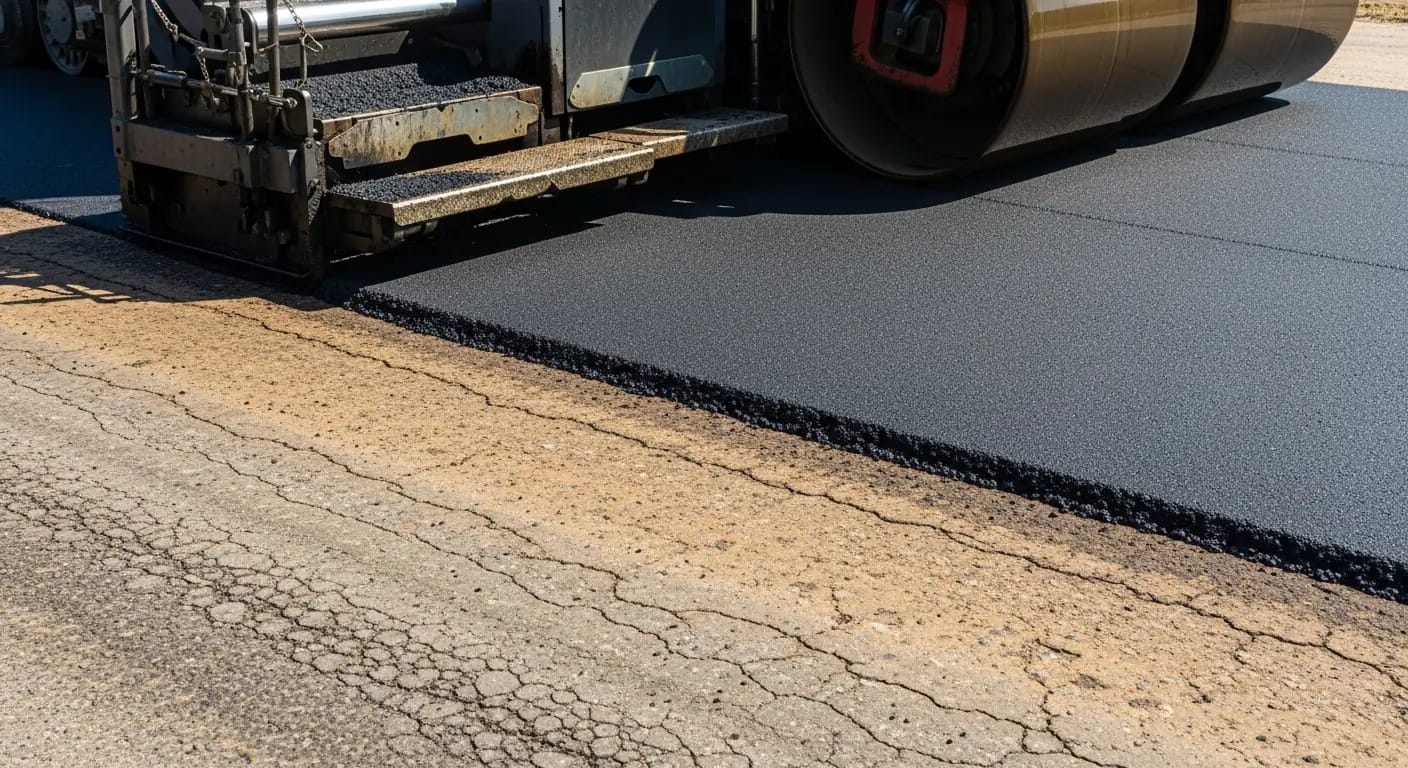
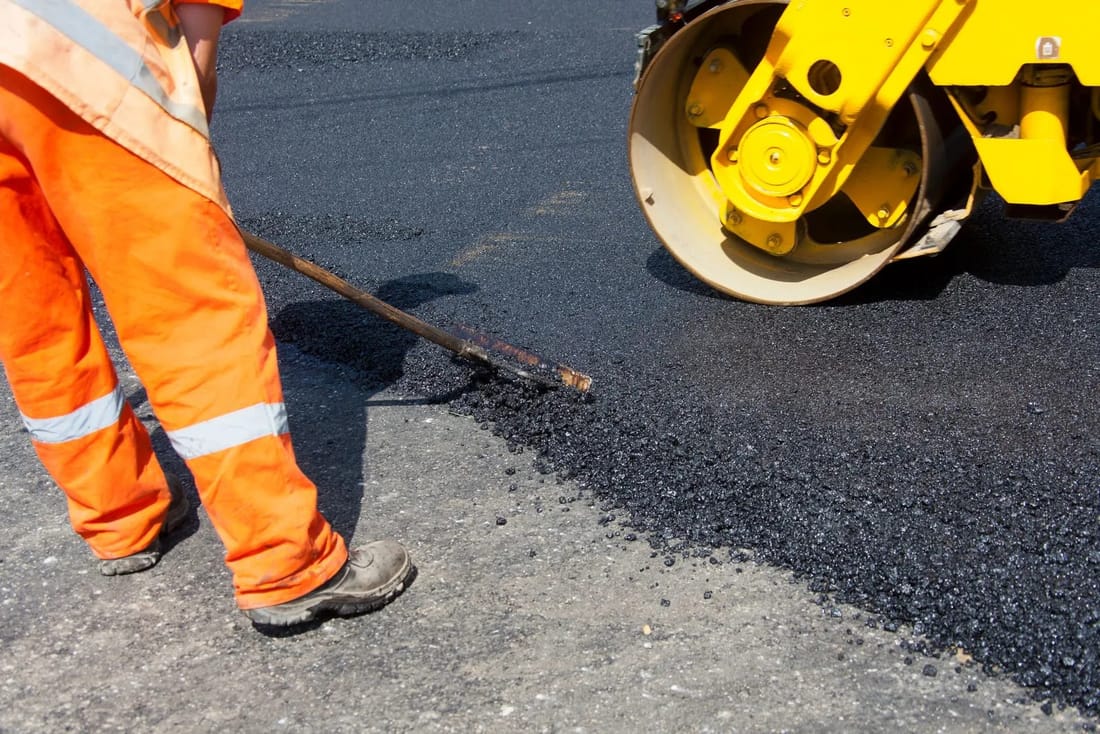
After milling and patching, we clean the entire area. Street sweepers and blowers remove dust and loose stone. Then we apply a tack coat, which is a sprayed asphalt emulsion that helps the overlay adhere to the existing pavement. The overlay mix is delivered hot from a local plant, then placed using a paver for consistent thickness. On commercial properties, we typically install 1.5 to 2.5 inches of new asphalt, thicker in heavy truck areas or fire lanes. Rollers compact the mix in several passes to achieve the right density so the pavement will resist rutting and water intrusion.
We finish by adjusting manhole lids and valve boxes to match the new elevation, cutting clean joints where the new overlay meets existing pavement, and sealing those joints to keep water out. Once the asphalt has cooled, usually within a few hours in Charleston temperatures, we restripe the lot, add or refresh ADA markings, and install any wheel stops or signage that was removed before work began.
Local Conditions That Affect Your Overlay and Its Cost
Charleston’s climate and soil conditions have a big impact on how commercial asphalt resurfacing should be designed and what it will cost. High heat, frequent heavy rains, and coastal humidity speed up oxidation and softening of the asphalt binder. If your lot has significant shade from live oaks, you may also see moss and moisture problems, especially along the edges. Precision Asphalt Charleston looks at these local factors to recommend mix types and thickness that match your specific site, not just a generic one size overlay.
Costs on a commercial overlay job are driven first by the amount of milling and base repair required. A relatively sound office park lot in North Charleston that only needs light milling and a uniform overlay will be on the lower end per square foot. An older strip center that has been patched repeatedly, with rutting at the drive lanes and low spots near the storm drains, will require more saw cutting, base replacement, and deeper milling. Those items increase labor and materials, but they are what prevent you from paying to resurface again in just a few years.
Access and phasing also affect price. In busy areas like downtown Charleston or near hospitals and schools, we often work at night or in tight phases so you can keep some parking open. Night work costs slightly more due to lighting, smaller crews, and coordination, but for many businesses it is worth it to avoid interrupting daytime customers and operations. If your lot serves restaurants or hotels that stay busy late, we plan around those hours as well.
Material choices can change costs and performance too. For heavy truck yards, distribution centers, or gas stations, we may recommend a higher performance asphalt mix with more stone and less sand, which is better at resisting rutting from slow moving heavy loads. For standard retail parking, a conventional commercial mix and 1.5 to 2 inches of overlay is usually sufficient. We can also discuss whether to break the project into phases over multiple years so you can spread out the budget without letting any area fall too far behind.
Common Problems We Solve With Resurfacing & Overlays
Most commercial property owners call us when they start seeing large areas of cracking, potholes forming every rainy week, or customers tracking gravel into their businesses. Resurfacing is often the right solution between simple crack sealing and full reconstruction. Precision Asphalt Charleston uses overlays to correct several recurring issues we see in this region.
One common problem is ponding water after storms. Low spots develop over time in drive aisles and in front of storefronts, especially in older centers built before current stormwater standards. During resurfacing, we can correct many of these issues by adjusting slopes when we mill and when we set our new overlay elevations. This might mean changing the thickness slightly across the lot so the water flows toward inlets instead of sitting under parked cars or at entrances.
Another frequent issue is reflective cracking from old joints and patches. If you have a lot with many previous trench cuts from utilities or years of patchwork, we pay special attention to those lines. In some cases, we will install reinforcing fabrics or grids over the worst areas before placing the overlay. We may also widen or reconfigure patched areas so the new joints do not line up with the old ones. This reduces the chance that cracks from the underlying pavement will quickly transfer into the new surface.
We also address edge failure and raveling at the outer limits of parking areas, especially where asphalt meets grass or open soil. In Charleston’s soft soils, unsupported edges break off under vehicle load and water intrusion. During resurfacing, we often cut back and rebuild these edges, then add proper shoulders or tie into concrete curbs. This helps your new overlay last longer and keeps the perimeter from crumbling again.
Safety and compliance problems, such as faded striping, missing ADA markings, and unclear traffic patterns, are usually resolved as part of the overlay project. Once the new asphalt is in place and cured, we re-layout stall sizes, fire lanes, loading zones, and accessible parking according to current standards and your business’s traffic flow. This gives you a safer, easier to navigate lot at the same time you upgrade the pavement.
What Charleston Property Owners Should Know Before Hiring
Before you authorize a commercial asphalt resurfacing project, it helps to know what to ask and how to prepare the site. Precision Asphalt Charleston encourages property managers and owners to walk the lot with us or another contractor and mark out problem areas that impact your operation. Note where customers trip, where delivery trucks complain about ruts, and where water tends to sit after a storm. These observations, combined with our evaluation, lead to a better overlay plan.
Ask for a clear scope that separates milling, base repairs, overlay thickness, and striping. The proposal should describe how deep milling will be, where full depth patching will happen, what asphalt mix will be used, and how access will be maintained. If a contractor only describes a generic 1 inch or 1.5 inch overlay with no mention of base repair or drainage, you are likely paying for a short term cosmetic fix instead of a long term resurfacing solution.
Scheduling and communication are critical for commercial work around Charleston. Restaurants on Coleman Boulevard, medical offices in Mount Pleasant, and warehouses in North Charleston all have different busy windows. We provide phasing plans that show which areas are closed each day, where temporary entrances will be, and how long each section needs to cure before traffic returns. You should communicate these plans to your tenants and customers ahead of time so they are not surprised by cones or detours.
Make sure your contractor is properly insured and familiar with local requirements, including ADA layout and fire lane markings. Ask about warranty terms and what is covered. A reasonable overlay warranty will address issues like early raveling, delamination, or poor compaction, not damage from standing dumpsters or chemical spills. We also recommend planning a basic maintenance schedule for the new surface. Crack sealing and periodic sealcoating, timed correctly for Charleston’s climate, can add years to the life of your overlay and protect your investment.
Finally, be cautious of low bids that skip milling or patching and promise to simply place new asphalt over everything existing. While this may look good for a short time, it often creates problems at curb lines, sidewalk transitions, and drainage points. A well planned commercial asphalt resurfacing project treats the underlying causes of distress, not just the appearance, so your business can operate on a safe, clean, and durable surface for many years.